


- With years of industry knowledge, we bring unparalleled expertise to every project.
- Our rigorous standards ensure top-notch quality in all our products.
- Constantly striving for new and improved solutions, we never stop innovating.
- Tailoring our services to your unique needs, we ensure complete satisfaction.
- Experience excellence with our dedicated support and customer-focused approach.
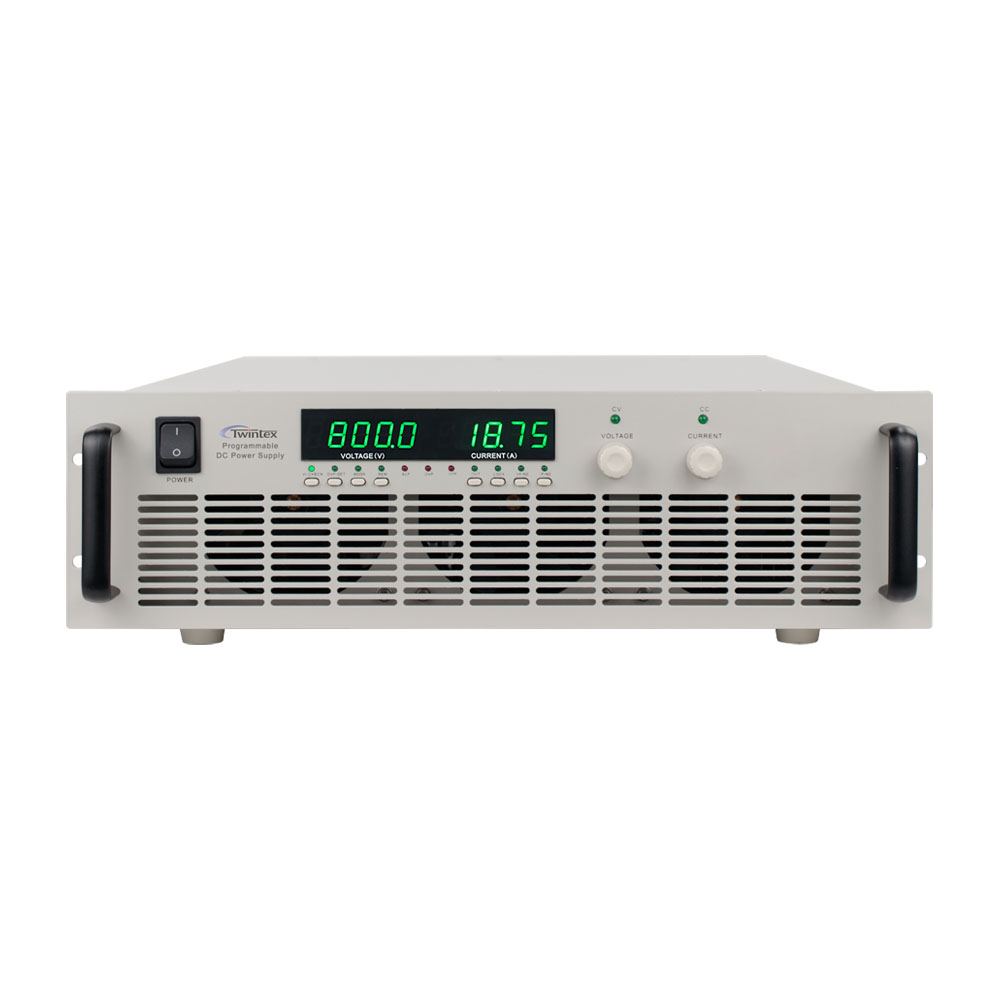
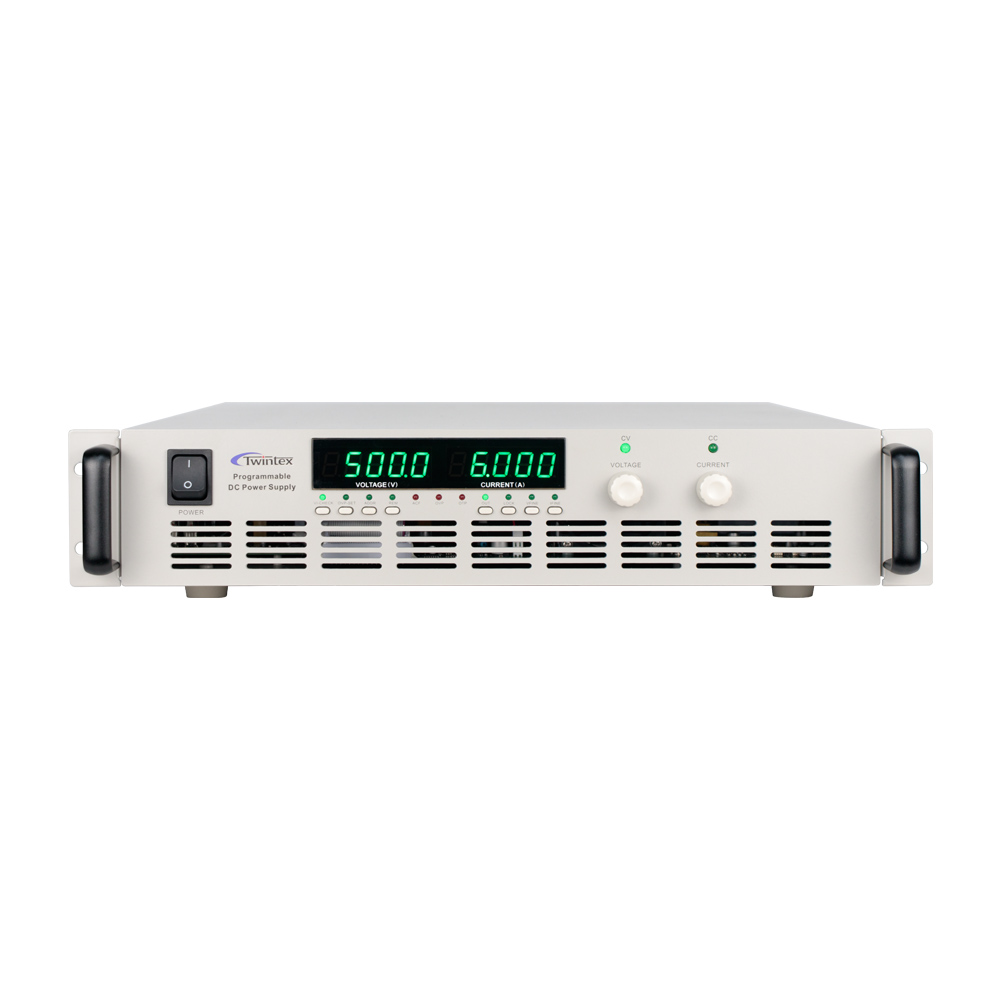
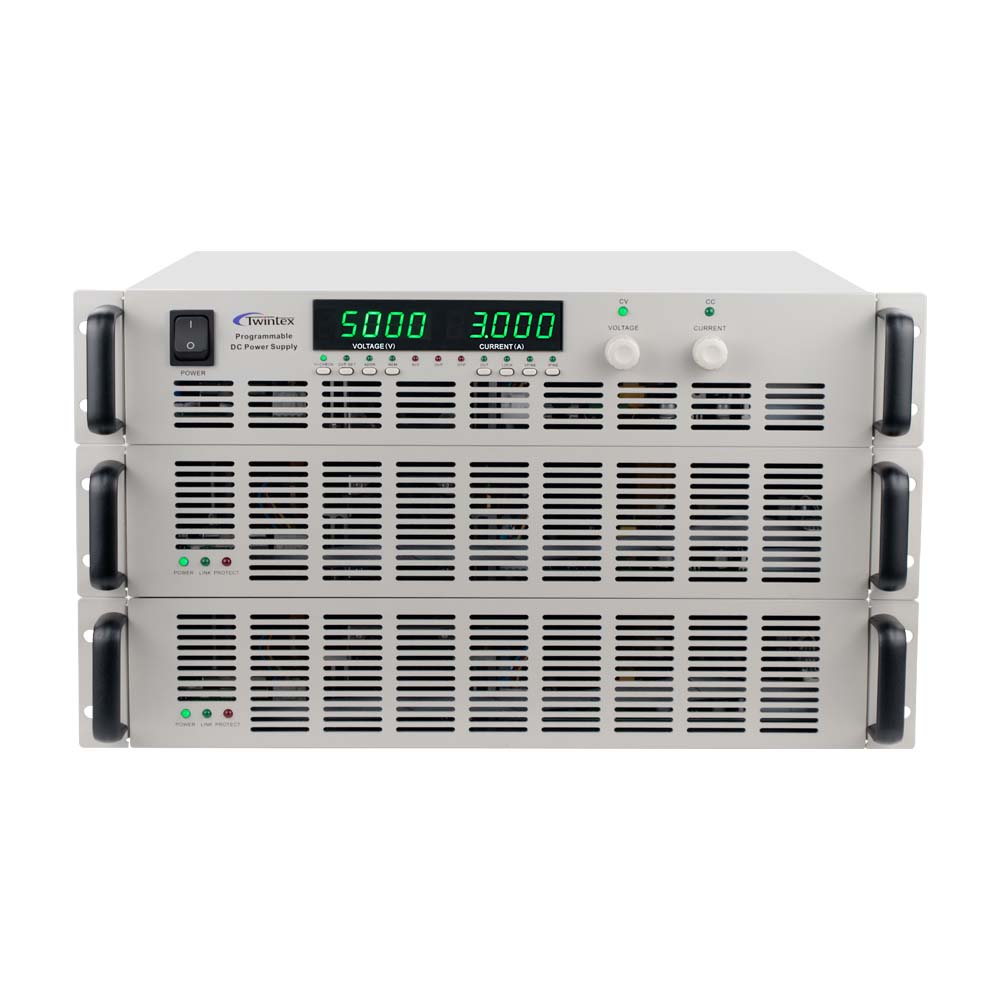
Programmable High Current DC Power Supply 10V 2000A 3000A 4000A 5000A to 10kA
Programmable High Current DC Power Supply 10V 2000A 3000A 4000A 5000A to 10kA
- Programmable High Current DC Power Supply
- Rated output 10V 2000A 3000A 4000A 5000A to 10kA
- Modular design
- Low ripple, high stability
- List mode function, Auto Run function
- Interlock loop function
- No overshoot during startup
- Soft start by hardware, and adjustable voltage rise time by software
- Multiple protections: OVP, OTP, ACF and current limit protections
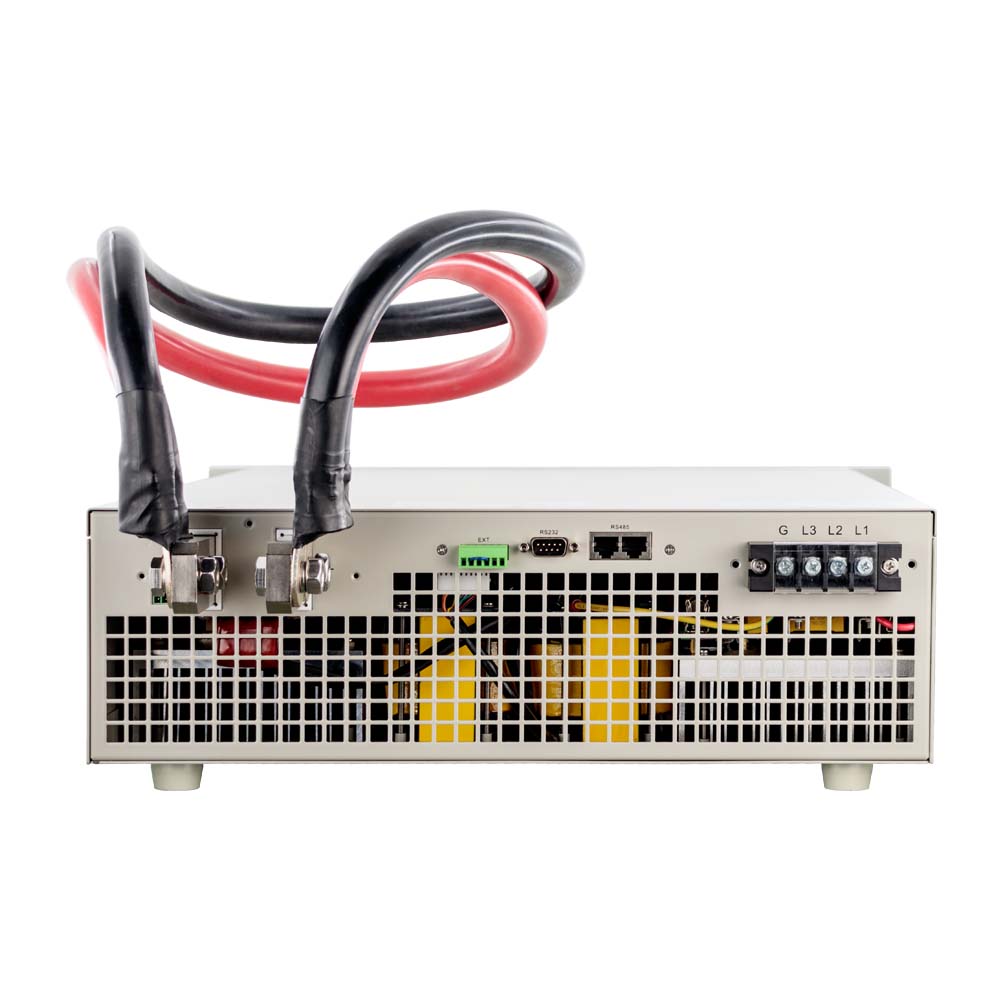
- Standard interface: RS232 & RS485, support ModBus-RTU commands
- Options: DC 0-5V, 0-10V or 4-20mA interface for control and feedback
- Options: LAN interface
- Comprehensive customization services
Quote Now
The PCL 10V series programmable high current DC power supply utilizes multiple high-reliability 10V 1000A modules connected in parallel. It delivers a 10V 2000A output within a standard 12U cabinet and supports capacity expansion up to 10V 4000A in the same unit, meeting the evolving current requirements of production lines and laboratories. With optional 20U or 30U cabinets, capacity can be extended to 10V 6000A or 10V 10kA respectively, flexibly accommodating demanding applications such as ultra-low voltage/high-current burn-in testing, contact resistance testing, and superconducting coil powering.
Standard RS232 and RS485 digital interfaces facilitate integration into automated systems, while optional LAN port or analog control enable remote voltage/current adjustment and status monitoring. The entire series features forced-air cooling and intelligent temperature control, along with comprehensive protections against over-temperature, over-voltage, AC fault and short circuit protections.
The short circuit protection is configured in CC-operation. This feature is particularly well-suited for applications such as:
- High-current shunt verification (measuring voltage drop vs. current linearity)
- Temperature rise testing for EV high-voltage connectors (simulating heat generation from minute contact resistance under full load)
- Electrolytic cell or electroplating processes.
Users can safely establish the test circuit directly via the power supply’s constant-current short-circuit capability, eliminating the need for bulky series current-limiting resistors, thereby significantly simplifying test setups and enhancing repeatability.
For different current ratings, their typical applications are listed in below.
10V 2000A 20kW High-Current DC Power Supply PCL10-2000:
- Electronic Component Burn-in Testing: Conducts long-term, loaded burn-in tests for electronic components such as capacitors, resistors, relays, transistors, and sensors.
- Electrolysis and Water Treatment: Suitable for laboratory-scale electrolysis experiments, precious metal refining, water treatment, and similar applications.
10V 3000A 30kW High-Current DC Power Supply PCL10-3000:
- Industrial Electroplating: Widely used in surface treatment processes such as chrome, nickel, copper, and zinc plating.
- Scientific Research and Laboratories: Serves as a high-current experimental power source for universities and research institutions.
10V 4000A 40kW High-Current DC Power Supply PCL10-4000:
- High-Temperature Superconducting Cable Testing: Conducts critical current testing experiments on superconducting cables.
- Industrial Electrolysis and Electric Heating: Suitable for non-ferrous metal electrolysis, rare-earth ore extraction, heating of carbon/graphite/refractory materials, single-crystal furnace heating, etc.
10V 5000A 50kW High-Current DC Power Supply PCL10-5000:
- High-Current Sensor Testing: Provides a constant current source for testing high-precision current sensors.
- Conductor and Cable Temperature Rise Testing: Used to test the temperature rise characteristics of cables and conductors under high-current conditions.
10V 6000A 60kW High-Current DC Power Supply PCL10-6000:
- Specialized Industry Power Supply Simulation: Used to simulate power supply environments for vehicle-mounted, airborne, and shipborne electronic equipment.
- Industrial Automation and Materials Research: Suitable for industrial automation equipment and new material research requiring high currents.
10V 8000A 80kW High-Current DC Power Supply PCL10-8000:
- Electrical Contact and Cable Temperature Rise Testing: Used for temperature rise verification of components such as circuit breakers and cables.
- Testing of Novel Materials and Conductor Temperature Rise: Provides adjustable, low-ripple DC power to universities and research institutes for experiments on novel materials and conductor temperature rise testing.
10V 10kA 100kW High-Current DC Power Supply PCL10-10000:
- Large-Scale Electrolysis Systems: Supplies power to electrolysis systems requiring massive DC currents, such as those in the chlor-alkali industry.
- Scientific Research and Large-Scale Experimental Facilities: Provides ultra-high-current power for cutting-edge scientific research in fields such as physics and materials science.

Product Parameters
High Current DC Power Supply 10V 1000A to 10kA
| Model (10V) | Rated Output | Cabinet size WxHxD (mm) | Net weight | |||
| V | A | W | OVP | |||
| PCL10-1000 | 10V | 1000A | 10KW | 10.5V | 482.6×132.5×613 (3U) | 32kg |
| PCL10-2000 | 10V | 2000A | 20kW | 10.5V | 600×734.6×732 (12U) | 85kg |
| PCL10-3000 | 10V | 3000A | 30kW | 10.5V | 600×734.6×732 (12U) | 115kg |
| PCL10-4000 | 10V | 4000A | 40kW | 10.5V | 600×734.6×732 (12U) | 145kg |
| PCL10-5000 | 10V | 5000A | 50kW | 10.5V | 600×124%x732 (20U) | 190kg |
| PCL10-6000 | 10V | 6000A | 60kW | 10.5V | 600×124%x732 (20U) | 220kg |
| PCL10-7000 | 10V | 7000A | 70kW | 10.5V | 600×1560.7×732 (30U) | 290kg |
| PCL10-8000 | 10V | 8000A | 80kW | 10.5V | 600×1560.7×732 (30U) | 320kg |
| PCL10-9000 | 10V | 9000A | 90kW | 10.5V | 600×1560.7×732 (30U) | 350kg |
| PCL10-10000 | 10V | 10000A | 100kW | 10.5V | 600×1560.7×732 (30U) | 380kg |
| AC input | 3φ4W (L1, L2, L3, PE), 380V±10% 47~63Hz (at default) 3φ4W (L1, L2, L3, PE), 440V/480V±10% 47~63Hz (at request) | |||||
For the purpose of product improvement, specifications are subject to change without prior notice.
Why Choose Us.
Frequently Asked Questions
A DC power supply is to supply voltage and current in constant voltage (CV) or constant current (CC) mode within the rated output range. Such working characteristics is called a constant voltage/constant current automatic cross-over type. This permits continuous transition from constant current to constant voltage modes in response to the load change. The intersection of constant voltage and constant current modes is called the crossover point. Below figure shows the relationship between this crossover point and the load.
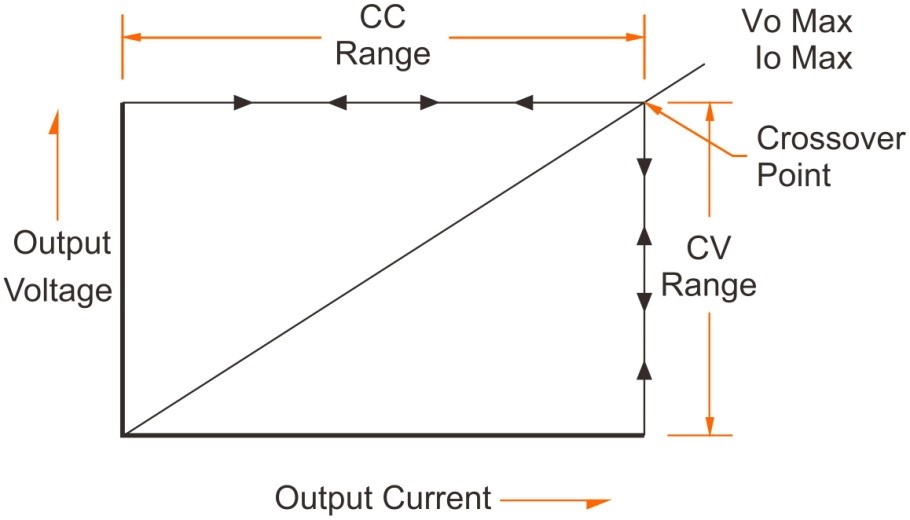
In CV mode, a regulated output voltage is provided. The output voltage remains constant as the load increases while the output current changes in response to the load changes, up till the present current limit point is reached. At that point, the output current becomes constant and the output voltage drops in proportion to the further increases in load.
Similarly, in CC mode, crossover from the CC to CV mode automatically occurs from a decrease in the load. A regulated output current is provided. The output current remains constant as the load decreases while the output voltage changes in response to the load changes.
A power supply with CV and CC operation mode can be operated in only one mode according to load situation. The power supply is in CV mode when the actual load is over the preset load capacity; and the power supply is in CC mode when the actual load is below the preset load capacity.
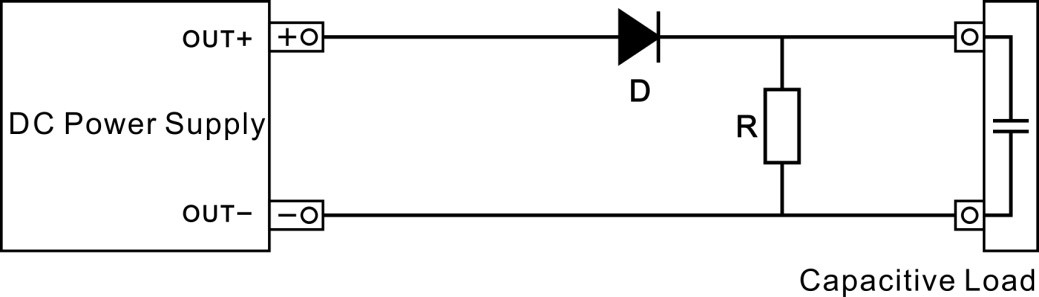
When the power supply is connected to a big capacitive load, it always causes increase to the output voltage in a power supply. The output voltage may make fast increase to the Over Voltage Protection point. It may also cause slow decrease when the output voltage is turned down.
To solve this problem, connect a power resistor in parallel to the output terminals of the power supply; at the same time, connect a diode in serial between output terminals and the load.
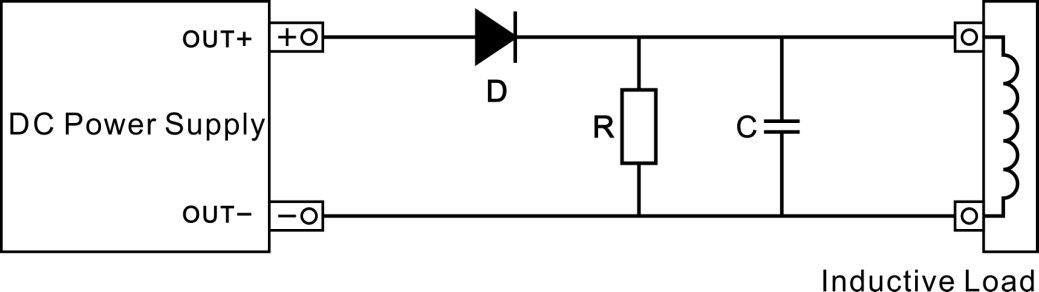
When an inductive load is connected to the power supply, it will cause a reverse polarity induction electric motive force when the power supply is turned on or off, or when preset the output voltage. The pulse noise caused by an inductive load will also affect the power supply, especially when the pulse noise has the same polarity with the output of power supply.
To avoid effect or damage to the power supply, connect a diode in serial between the output terminals of power supply and the load; at the same time, connect a power resistor and a capacitor in parallel to the load to make a R-C snubbed circuit, which will significantly restraint generation of the noise.
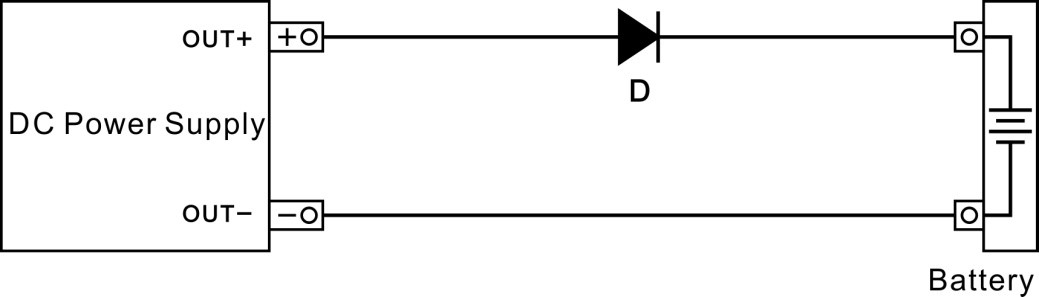
When use the power supply to charge a battery, such as accumulator and ni-mh battery, the recommended protection measures is to connect a diode between the power supply and the battery. When the output electrolytic capacitor of the power supply is charged, connecting a load (battery) may cause sparks. This is normal. After the two of them get to equal voltage, the sparks will disappear.
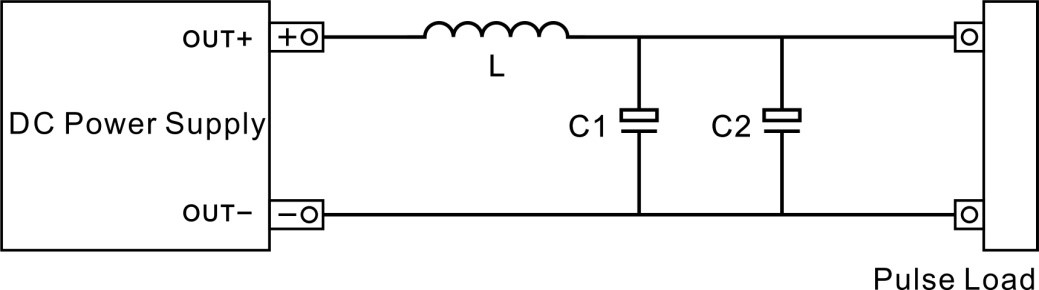
Even if the peak current of a pulse load, such as motor, bulb, DC-DC or DC-AC converter module, does not exceed the rated current of the power supply, it will also cause voltage drop or instability to the output.
A basic solution is to connect a inductor in serial between the power supply and the load. Or, choose a power supply with higher rated current.
If the pulse circuit has a small pulse width or low peak current, another solution is to connect a capacitor with large capacity. A reference to choose capacity of a capacity is: 1000uF capacity to a 1A current.
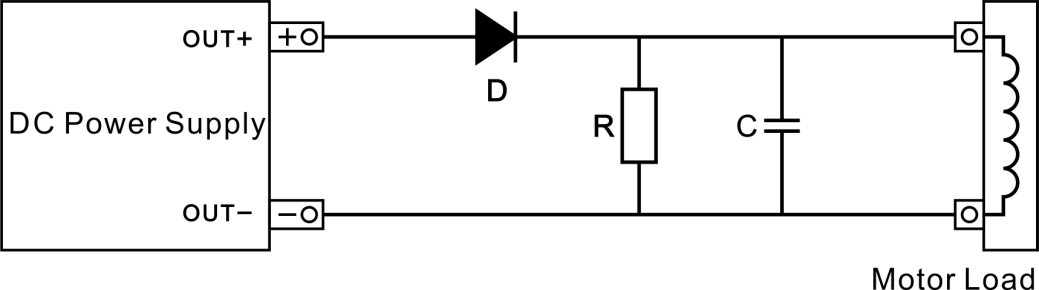
When the power supply is connected to a load that will cause reverse polarity current to the power supply output, the output voltage will increase, because the power supply cannot absorb the reverse polarity current from the load.
A solution is to connect a diode in serial between the output terminal and the load; at the same time, connect a discharge resistor in parallel to the load to absorb the reverse polarity current. When the reverse polarity current is a peak surge, connect the large electrolytic capacitor in parallel to the two ends of the load.
Get Quote Now!
Welcome to discuss your purchasing requirements with our customer service.
Get The
Catalogue
Document
From more than 10 years experiences in OEM & ODM services, our sales team and technical team are always available to check and discuss your requirement details.Whether you’re looking for reliable DC motors to enhance precision in your devices or powerful AC motors for robust industrial applications, we have you covered.


 English
 Español
 Français
 Português
 Русский